
Curriculum Handbook · 2026–2027
IGCSE Pathway
Years 10 & 11
Your guide to International GCSE — what you’ll study, how you’ll be assessed, and where it leads.
Welcome to Years 10 & 11

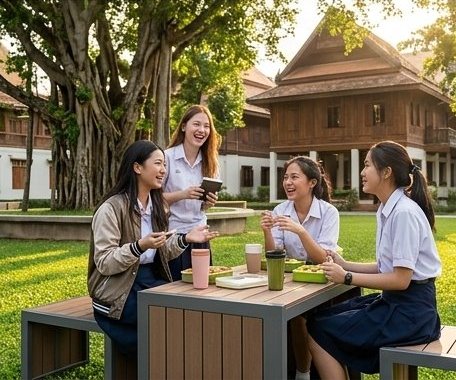
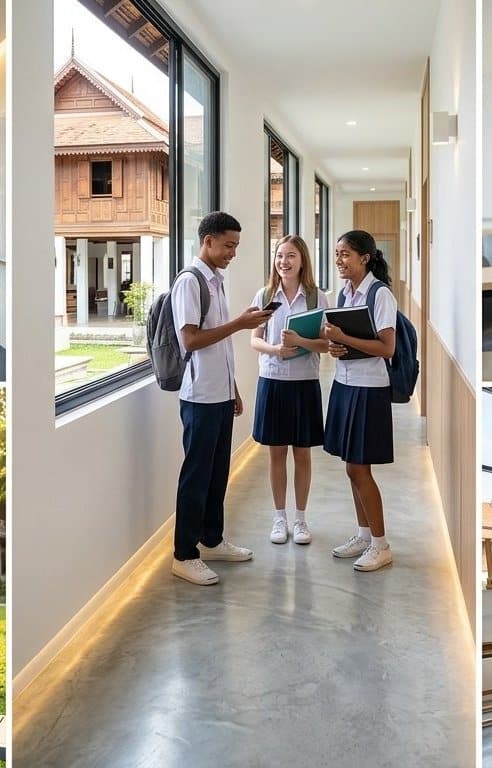
Years 10 and 11 are where everything starts to come together. The knowledge, skills, and habits built in Years 7–9 now flow into two years of focused, internationally recognised study — culminating in IGCSE qualifications that open doors to A-Level, university, and careers around the world.
At Esara, we believe exams are important — but they are not the whole story. We want every student to understand what they are learning and why it matters, and to arrive at their exams feeling prepared, confident, and calm.
At Esara, we believe exams are important — but they are not the whole story. We want every student to understand what they are learning and why it matters, and to arrive at their exams feeling prepared, confident, and calm.
What is IGCSE? The International General Certificate of Secondary Education (IGCSE) is one of the world’s most widely recognised academic qualifications for 14–16 year olds. IGCSE results are accepted by universities and employers globally — in the UK, USA, Australia, Europe, and across Asia.he net.
• Globally recognised
• University-ready
• Strong foundation for A-Level
• Academically rigorous
How IGCSE Works
IGCSE is a two-year programme taken in Years 10 and 11. Most subjects are assessed by written examinations at the end of Year 11, with some subjects also including coursework, portfolio, or oral components.
📅 Duration
Two full academic years — Year 10 and Year 11. All final examinations are taken in May/June of Year 11.
📝 Assessment
Primarily written examinations set by an international examination board. Some subjects include coursework, portfolios, or speaking components.
🏆 Grading
Students are graded 9–1 (or A*–G in some specifications). Most universities look for grades 4 and above for entry consideration.
🌍 Recognition
IGCSE results are recognised by universities and employers in over 150 countries, including the UK, USA, Australia, and across Asia.

Choosing Your Pathway
At Esara, students choose from three flexible pathways — depending on their strengths, interests, and future goals. Every pathway includes the same core mandatory subjects, with choices made in the optional and vocational areas.
Pathway 1
Full Academic
A broad academic programme of 8–10 IGCSEs — ideal for students aiming for competitive university entrance or traditional A-Level study.
• All core mandatory IGCSEs
• 3–5 optional IGCSEs chosen to match interests and goals
• No BTEC
• All core mandatory IGCSEs
• 3–5 optional IGCSEs chosen to match interests and goals
• No BTEC
Pathway 2
Mixed Route
A blend of academic IGCSE and one BTEC vocational qualification — great for students with a clear career direction.
• Core mandatory IGCSEs
• 1–2 optional IGCSEs
• 1 BTEC Level 2
• Core mandatory IGCSEs
• 1–2 optional IGCSEs
• 1 BTEC Level 2
Pathway 3
Vocational Focus
A stronger vocational emphasis for students who thrive in project-based, practical learning environments.
• Core mandatory IGCSEs
• 1 optional IGCSE
• 2 BTEC Level 2s
• Core mandatory IGCSEs
• 1 optional IGCSE
• 2 BTEC Level 2s
Not sure which pathway suits you? In Year 9, every student and family meets with our academic team for a personalised subject-choice conversation. We’ll look at your progress, interests, and ambitions together before any final decisions are made.
Core Mandatory Subjects
Every student at Esara takes these subjects regardless of pathway. They form the strong academic foundation that universities and employers expect.
Subject Area
Qualification
Assessment Style
English Language
IGCSE
2 written papers (100% examination)
English as a Second Language (non-native speakers)
ESL IGCSE
4 papers: Reading, Listening, Writing, Speaking
Mathematics
IGCSE
2 written papers; Foundation or Higher tier
Double Science (Biology & Chemistry)
IGCSE
2 papers per science; all written
Global Citizenship
IGCSE
Written examination + coursework project
Information & Communication Technology
IGCSE
Written papers + practical coursework
Optional Subjects
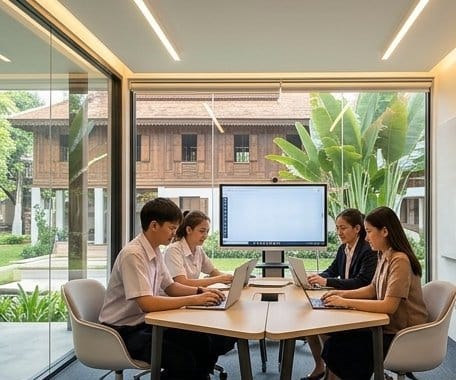
Students on Pathway 1 choose 3–5 optional subjects to reach 8–10 IGCSEs in total. Students on Pathways 2 and 3 choose fewer optionals, replacing some with BTEC qualifications.

Subject
Qualification Options
Who is this for?
Modern Languages (Chinese or Spanish)
IGCSE
Students with strong language skills or interest in international communication
Thai Language
IGCSE
Students in Thailand who wish to develop formal Thai language skills
Art & Design
IGCSE
BTEC
Creative students — fine art, graphic design, photography, or 3D design
Business
IGCSE
BTEC
Students interested in enterprise, marketing, finance, and the world of work
Economics
IGCSE
Analytical students interested in markets, global trade, and financial systems
Design & Technology
GCSE
Students who enjoy designing, making, and problem-solving with materials
English Literature
IGCSE
Students who love reading, literary analysis, and creative written response
History
IGCSE
Students who enjoy understanding the past, source analysis, and essay writing
Geography
IGCSE
Students interested in physical and human landscapes and global challenges
Accounting / Commerce
IGCSE
Students interested in business finance, bookkeeping, and financial statements
Subject Spotlights
A closer look at what students actually study in each core and popular optional subject.
📖
English Language
Students read, analyse, and write across a wide range of text types — building real communication skills for life.
Assessment: Unit 1 (60%) Non-fiction reading & transactional writing. Unit 2 (40%) Poetry/prose & imaginative writing.
📚
English Literature
Deep engagement with novels, poetry, drama, and literary heritage texts — developing the ability to write critically and personally.
Assessment: Unit 1 (60%) Poetry & modern prose. Unit 2 (40%) Modern drama & literary heritage.
📗
English as a Second Language
For students whose first language is not English. Practical, real-world topics building all four language skills authentically.
Assessment: Reading (25%), Listening (25%), Writing (25%), Speaking (25%).
🔢
Mathematics
Number, Algebra, Geometry, and Statistics. Students entered at Foundation or Higher tier — whichever fits them best — so everyone is set up to succeed.
Assessment: Two written papers, each 2 hours. Calculators permitted.
🧬
Biology
Cell structure, genetics, ecosystems, and the human body. Practical and analytical skills developed alongside core scientific knowledge.
Assessment: Paper 1 (2h, 110 marks) + Paper 2 (1h 15m, 70 marks).
⚗️
Chemistry
Inorganic, organic, and physical chemistry — strong emphasis on practical investigation and real-world application.
Assessment: Paper 1 (61%, 2h) + Paper 2 (39%, 1h 15m).
🌐
Global Citizenship
Human rights, globalisation, sustainability, and shared responsibilities — developing critical thinkers who understand the world they’re inheriting.
Assessment: Written examination + independent research project.
💻
ICT
Digital literacy, data handling, network systems, and practical ICT skills combined with theoretical knowledge and hands-on coursework.
Assessment: Written theory papers + practical coursework.
💼
Business
How businesses work — from small enterprises to multinationals. Marketing, finance, people management, and operations with strong real-world focus.
Assessment: Paper 1 (50%) Small business. Paper 2 (50%) Large business.
📊
Economics
Micro and macroeconomics, supply and demand, global trade, and economic policy — teaching analytical thinking about the world’s financial systems.
Assessment: Written examination papers. Your teacher will confirm specific details.
🎨
Art & Design
Students choose a specialism: Fine Art, Graphic Communication, Photography, Textile Design, or 3D Design — expressing their individual creative voice.
Assessment: Personal portfolio + externally-set assignment. No written exam.
🇪🇸
Modern Languages
Spanish and Chinese available. Both assessed across all four language skills through authentic, culturally rich content.
Assessment: Listening (25%) · Reading & Writing (50%) · Speaking (25%).
🏛️
History
Historical periods studied through source analysis, essay writing, and evaluating evidence — great foundation for law, politics, and social sciences.
Assessment: Written papers including source-based and extended essay questions.
📒
Accounting
Bookkeeping, financial statements, and accounting principles using international accounting standards — excellent foundation for A-Level business and economics.
Assessment: Unit 1 (2h written) + Unit 2 (1h 15m written).
BTEC Level 2 — Vocational Qualifications
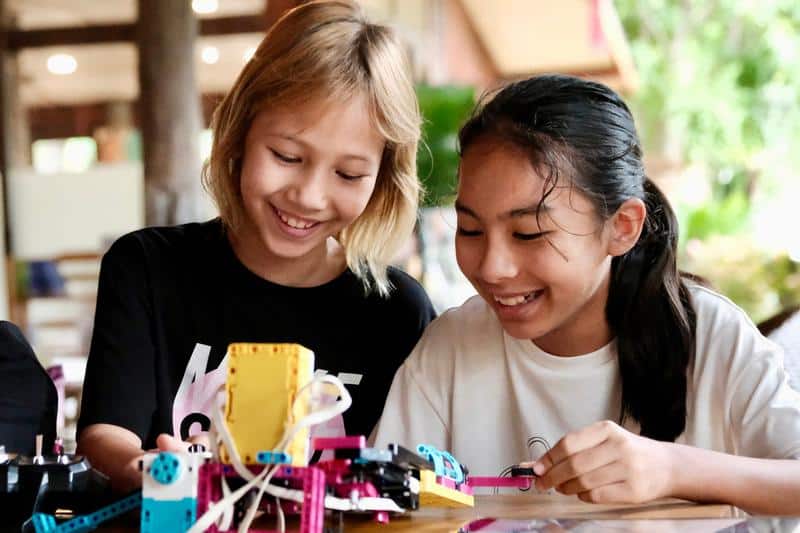
For students who want a more practical, project-based alternative to some optional IGCSEs, we offer BTEC Level 2 vocational qualifications — nationally and internationally recognised.
Why choose BTEC? Assessed through coursework, projects, and presentations — not just written exams. Suits students who produce their best work through doing rather than sitting papers.

Available from 2026–27:
🎨 Art & Design
Fashion, graphic design, photography, and more. Students build a portfolio of real creative work across a range of disciplines — ideal for those heading towards creative industries.
Fashion, graphic design, photography, and more. Students build a portfolio of real creative work across a range of disciplines — ideal for those heading towards creative industries.
💼 Business & Enterprise
Real-world business projects covering marketing, entrepreneurship, and enterprise skills. Students learn by doing — pitching ideas and analysing markets.
Real-world business projects covering marketing, entrepreneurship, and enterprise skills. Students learn by doing — pitching ideas and analysing markets.
Expanding from 2027–28 onwards — additional courses under consideration include:
• 🎭 Performing Arts
• ⚽ Sport
• ✈️ Travel & Tourism
• 🩺 Health & Social Care
• 📱 Creative Media
We’ll confirm additional courses ahead of each academic year.
• 🎭 Performing Arts
• ⚽ Sport
• ✈️ Travel & Tourism
• 🩺 Health & Social Care
• 📱 Creative Media
We’ll confirm additional courses ahead of each academic year.
How to Choose Your Subjects
Choosing your IGCSE subjects is one of the most important decisions of your school life — but it doesn’t have to be stressful.
Think about your interests and strengths
What subjects do you genuinely enjoy? Where do you do your best work?
Consider your future direction
Certain combinations support specific A-Level and university pathways — think ahead.
Talk to your teachers
Your subject teachers can give an honest picture of what IGCSE study in their subject actually involves.
Meet with our academic team
In Year 9, every student and family meets with us for a personalised subject-choice conversation.
Keep balance in mind
A good mix covers sciences, humanities, languages, and creative or vocational options — keeping future paths open.
A note for families: You know your child better than anyone. Please reach out to us at any point — we’re here to help.
Support During IGCSE

IGCSE is demanding — but no student at Esara faces that challenge alone. We wrap a strong support system around every Year 10 and 11 student.
🏫 Form Tutor
Your first point of contact for anything — academic or personal. Knows you, tracks your progress, always in your corner.
📚 Academic Support
Revision sessions, exam technique workshops, and individual support built into the programme.
💚 Wellbeing
Our wellbeing team supports students with stress management, study strategies, and personal challenges.
🌍 EAL / Learning Support
English language and learning support delivered as personalised help integrated into the timetable.
After IGCSE — What Comes Next
IGCSE is the launchpad. After Year 11, Esara students move into our A-Level programme or pursue other pathways that fit their ambitions.
• A-Level at Esara (Years 12–13)
• International Foundation Year
• Vocational / BTEC Level 3
• University application
• Gap year
University guidance: From Year 10 onwards, our team helps students think ahead — researching universities, understanding entry requirements, and building the profile that universities look for alongside grades.

